On April 1, the U.S. Supreme Court will hear oral arguments in Trump v Barbara challenging Trump’s executive order seeking to restrict birthright citizenship in the United States.
⚖️ Join the live stream audio on 4/1 at 7 am PT! ⚖️
What is the executive order?
On his first day in office, Trump signed an executive order that would restrict birthright citizenship, a bedrock principle enshrined in the 14th Amendment that guarantees citizenship for everyone born in the U.S. regardless of their parents’ immigration status.
This order would block access to U.S. passports, social security cards, healthcare access, federal student aid, and other essential benefits for 250,000 children born every year.
What are the origins of the 14th Amendment?
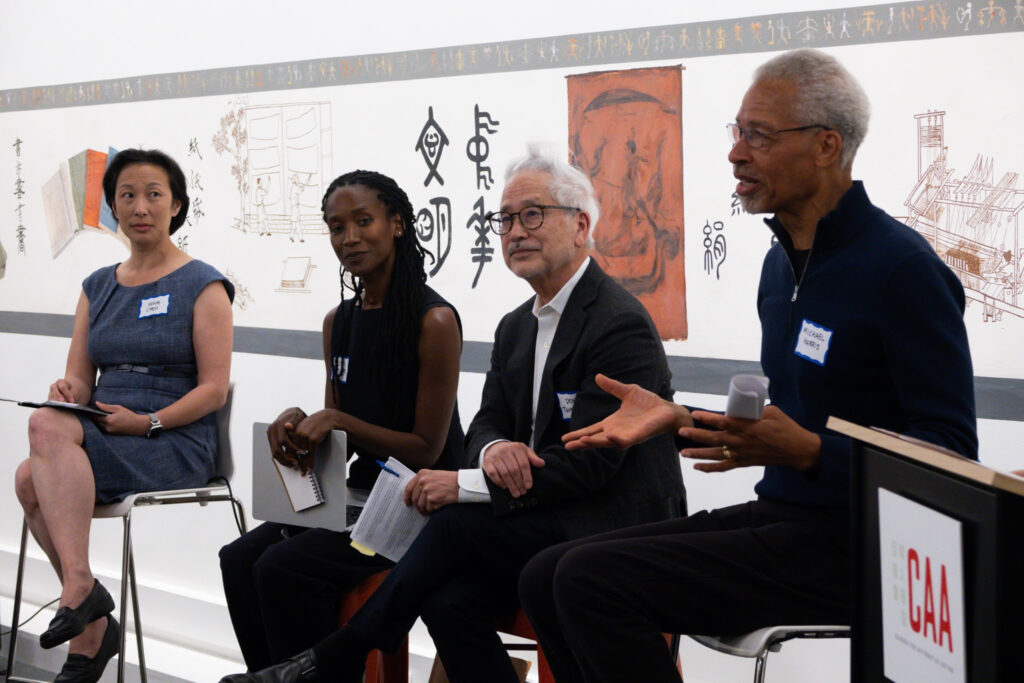
Any conversation about birthright citizenship must also acknowledge its origins in the long struggle for Black freedom. This week, CAA hosted a conversation, Birthright Citizenship: Surviving Through Solidarity, with special guests: Lisa Holder (Equal Justice Society), Don Tamaki (Minami Tamaki), Michael Harris (National Center for Youth Law), and Professor Ming Hsu Chen (UC Law San Francisco).
The 14th Amendment was ratified in the aftermath of the Civil War as a direct response to the exclusion of Black people from citizenship in a case called Dred Scott v Sandford, which declared that African Americans could not be U.S. citizens. Through resistance and organizing during Reconstruction, African Americans fought back and secured the principle that citizenship is a birthright — one that could not be denied on the basis of race or ancestry.
Why is it important to Chinese and Asian Americans?
Just a few decades later, the promise of the 14th Amendment was tested. That’s where Wong Kim Ark comes in.
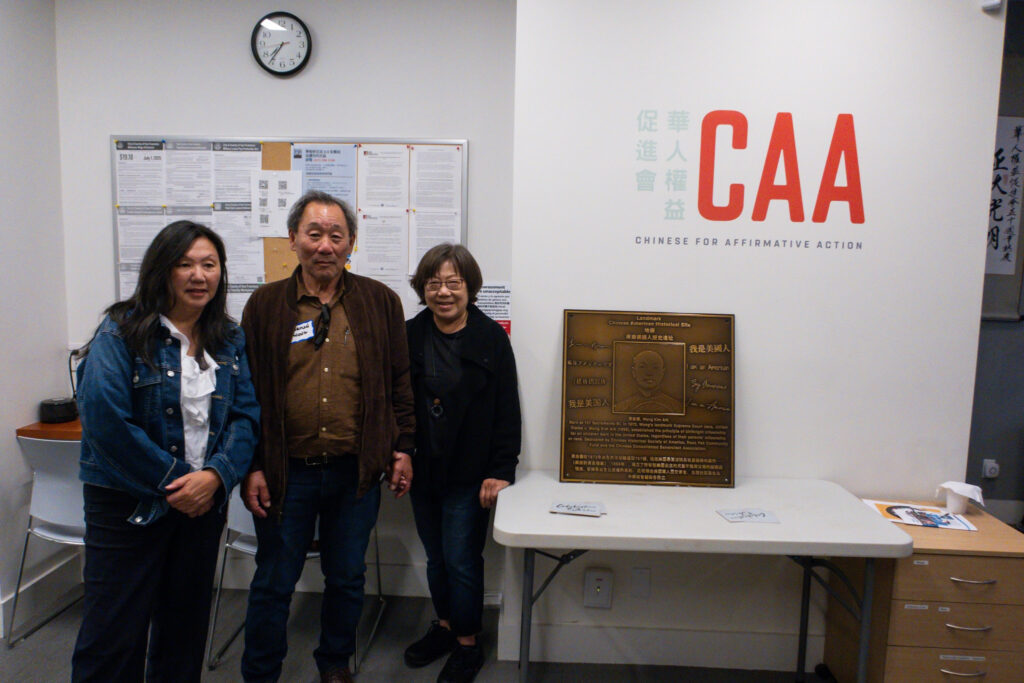
In 1898, U.S. v Wong Kim Ark declared that a child born in the U.S. to Chinese immigrant parents was a U.S. citizen. At a time when Chinese immigrants faced exclusion, discrimination, and violence, this landmark ruling affirmed the 14th Amendment by establishing a principle that has protected generations of Americans.
For the past year, CAA has been working closely with Norman Wong, a direct descendant of Wong Kim Ark, as a powerful voice in this moment. Norman has helped to bring history to life by connecting the legacy of U.S. v. Wong Kim Ark to the urgent challenges we face today. Through his family’s legacy, Norman has been reminding us that birthright citizenship was not simply granted – it was fought for, defended, and secured in the face of exclusion and racism.
Read more about Norman Wong’s family legacy here.
On April 1st, CAA is sending Norman to rally in front of the U.S. Supreme Court to once again defend birthright citizenship. Because of Wong Kim Ark and the African American struggle against slavery, children of immigrant parents have been able to thrive and grow in the U.S. This is a pivotal moment.
Just as generations before us fought to secure birthright citizenship, and as we continue to defend the promise of the 14th Amendment, we will rise to meet this moment again!