Communities are strongest when all people are able to fully participate in political, economic, and cultural life. And those who speak a language other than English deserve the opportunity to engage in all aspects of civic life, and have a civil right to access critical public services regardless of language ability.
At the same time, language diversity in schools and in society is increasingly important as economies, countries, and cultures grow more interconnected.
In San Francisco and California, CAA works to monitor and improve the City and State’s language access laws to keep pace with changing demographics, technology, and community needs. A major component of this work is building the limited-English proficient community capacity and infrastructure to both support and hold public and private institutions accountable for progress. As part of this work, locally, CAA is the lead agency for the San Francisco Language Access Network.
News & Updates
Between challenges to ethnic studies and a battle over tech’s influence in District 10, now is the time to ask for the San Francisco we deserve.
There’s a lot to mourn, but we remember our long history of activism and progress as we fight for our neighbors, our families, and our civil rights.
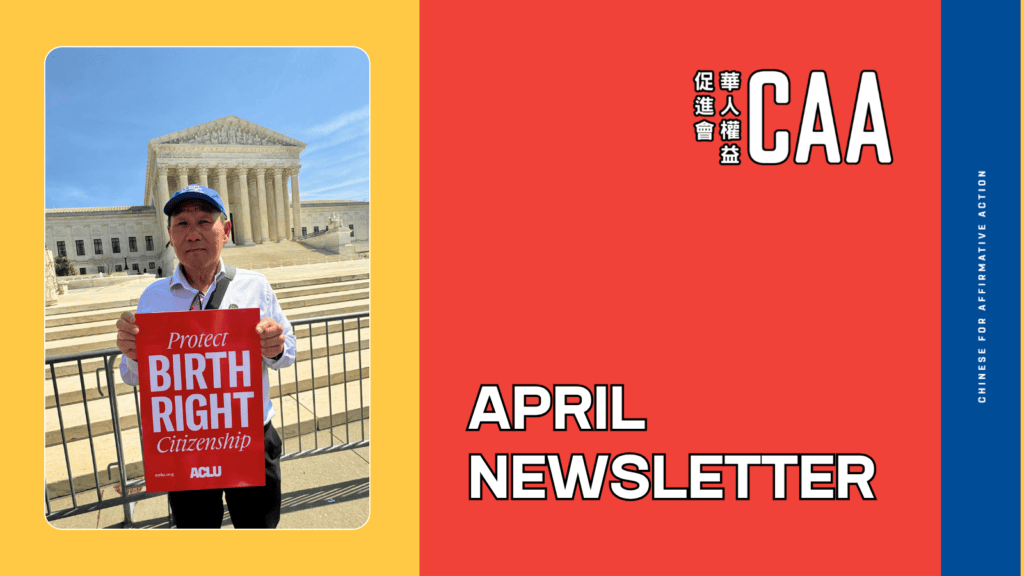
On a hot and sunny day in Washington, D.C., hundreds of Black, Latine, and Asian Americans gathered in front of the Supreme Court, as the Justices inside heard oral arguments concerning the future of birthright citizenship. CAA arranged for Norman…
While community members spoke in Cantonese and Spanish, no interpreter was there at the meeting, illustrating the challenge of having certified interpreters on hand when needed. Jose Ng, with Chinese for Affirmative Action, explained that they learned about the meeting…
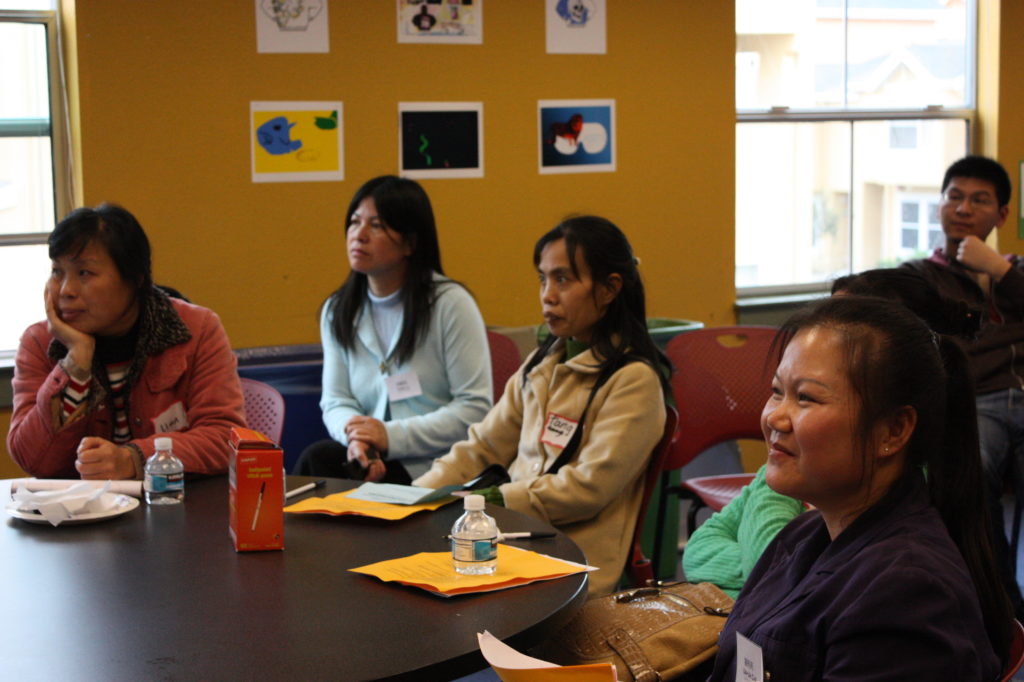
October 30th is our next Immigrants Rights Workshop in Cantonese. Come and learn about why language access is important!

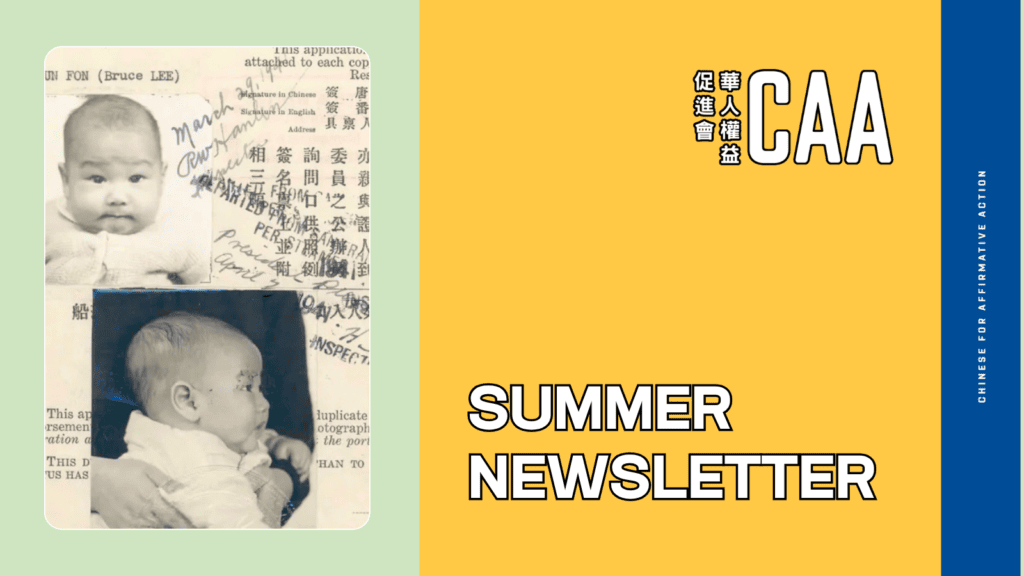
In this issue: We’re staying strong. Will you join us by making a gift to CAA? The Latest on Birthright Citizenship In a 6-3 decision, the conservative-majority Supreme Court avoided ruling on the constitutionality of Trump’s attack on birthright citizenship,…

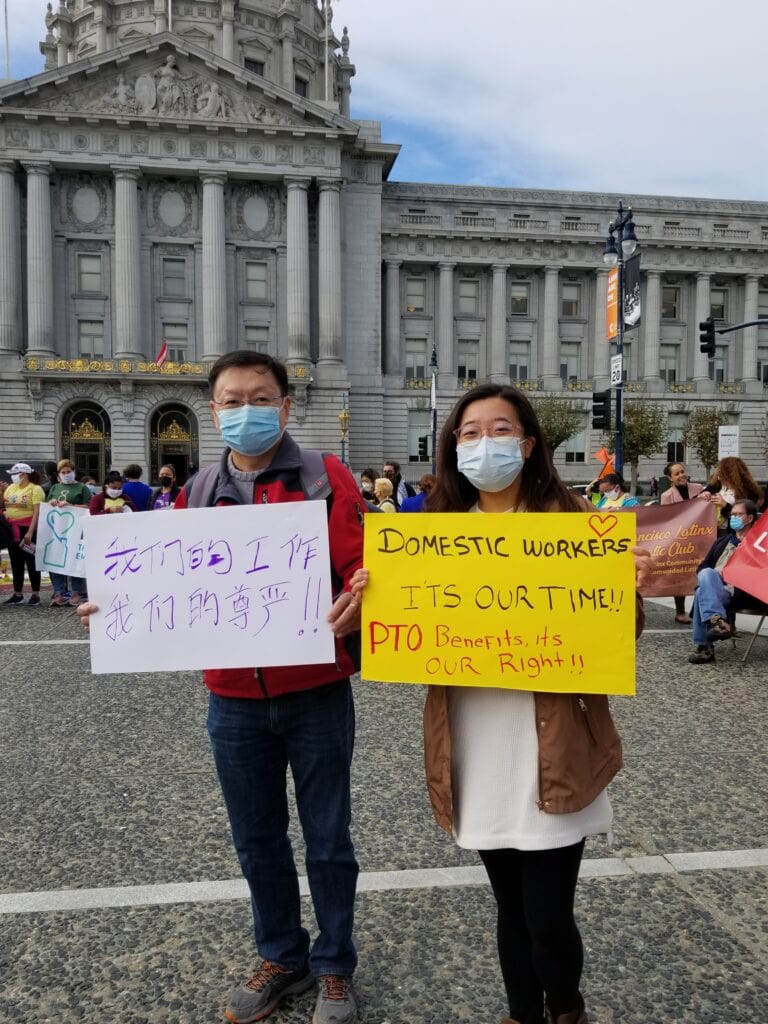
From the passage of important legislation protecting domestic workers and protecting language education — to the coming together of our friends, allies, and neighboring communities, we ended 2021 with hope in our hearts.
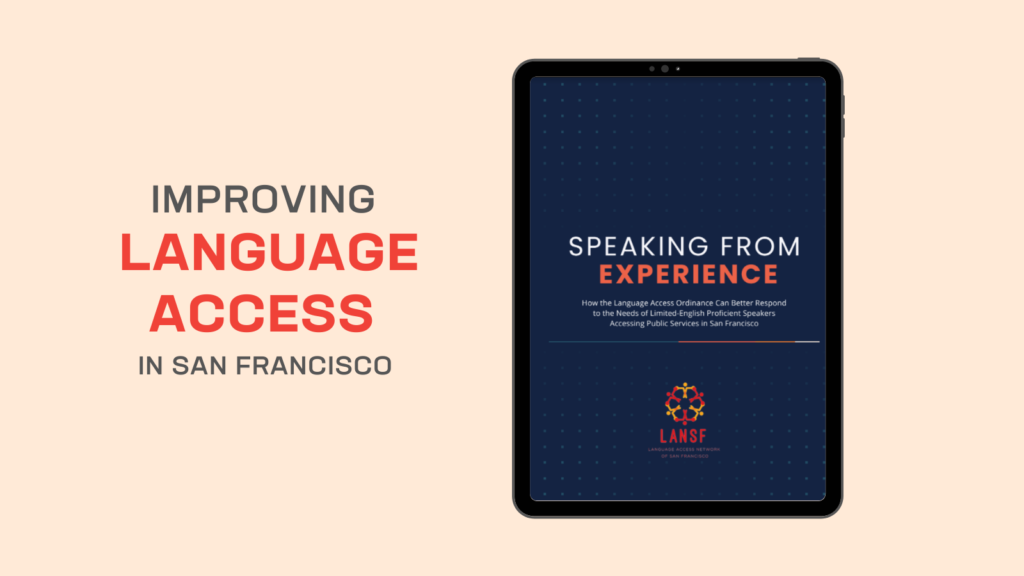
A new community assessment conducted by the Language Access Network of San Francisco (LANSF) provides new insight into how the LAO functions and to what extent it meets the ever-changing needs of LEP communities.
Since the beginning, CCSJ strove to develop a holistic approach to addressing violence and racial inequity in ways that meet the needs of Asian communities.

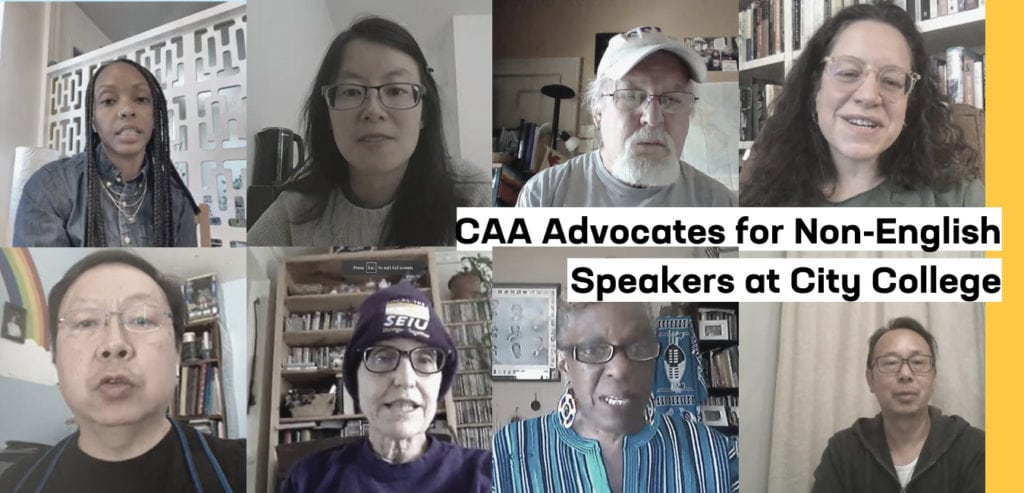
The City College of San Francisco (CCSF) approved budget cuts across 39 departments in a move that will impact non-English speakers and other communities that benefit from community college education in San Francisco.
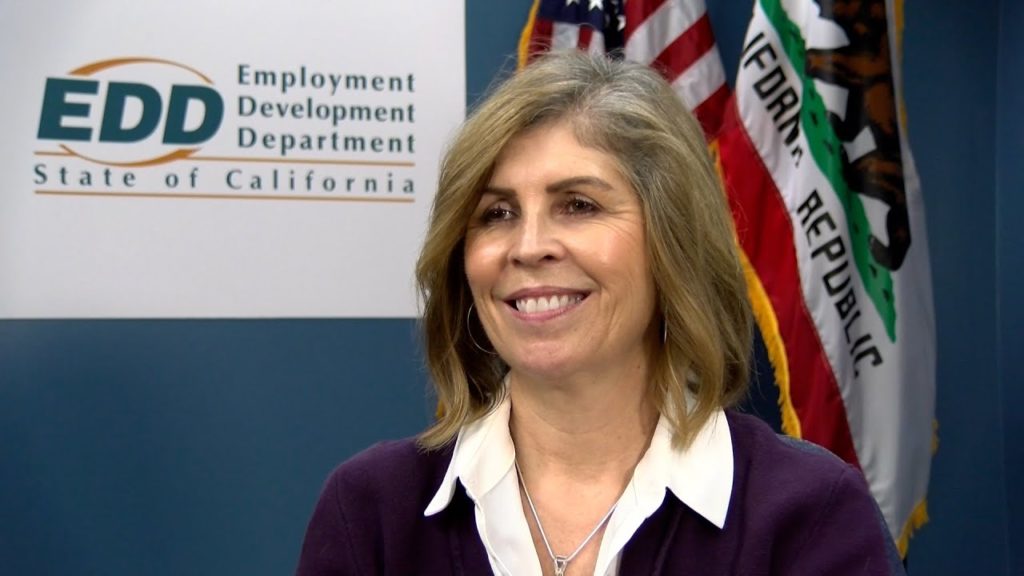
CAA advocates for Language Access with California’s Employment Development Department to ensure limited English proficient (LEP) community members have more equitable access to unemployment insurance and other programs and services.
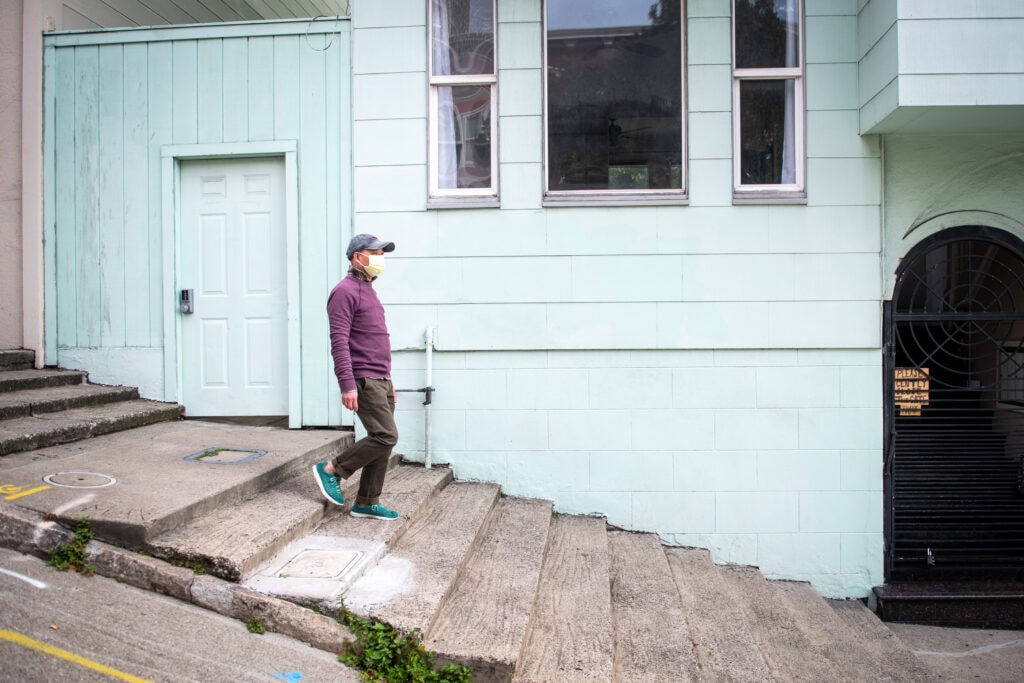
Insufficient language access makes it near impossible for non-English speakers in California to collect on unemployment benefits during the current economic crisis.